Why Mid-Back Pain Should Not Be Ignored
Key Takeaways
- Mid-back pain may develop from muscle strain, ligament injuries, joint dysfunction, posture issues, or sports-related overuse.
- Persistent stiffness, muscle tightness, or reduced spinal mobility may indicate underlying orthopedic conditions.
- Repetitive movement, athletic activity, and prolonged poor posture commonly contribute to thoracic spine discomfort.
- Early orthopedic evaluation may help reduce long-term pain and mobility limitations.
- Sports Medicine & Joint Replacement Specialists provides advanced spine and sports medicine care throughout Pittsburgh, Greensburg, and Warrendale.
Request an Appointment(opens in a new tab)(opens in a new tab)
Why Mid-Back Pain Is Common in Active Adults
The mid-back, also called the thoracic spine region, supports posture, upper-body movement, spinal stability, and athletic performance. Because this region works closely with the shoulders, neck, ribs, and core muscles, repetitive strain and poor movement mechanics can gradually increase stress on the spine.
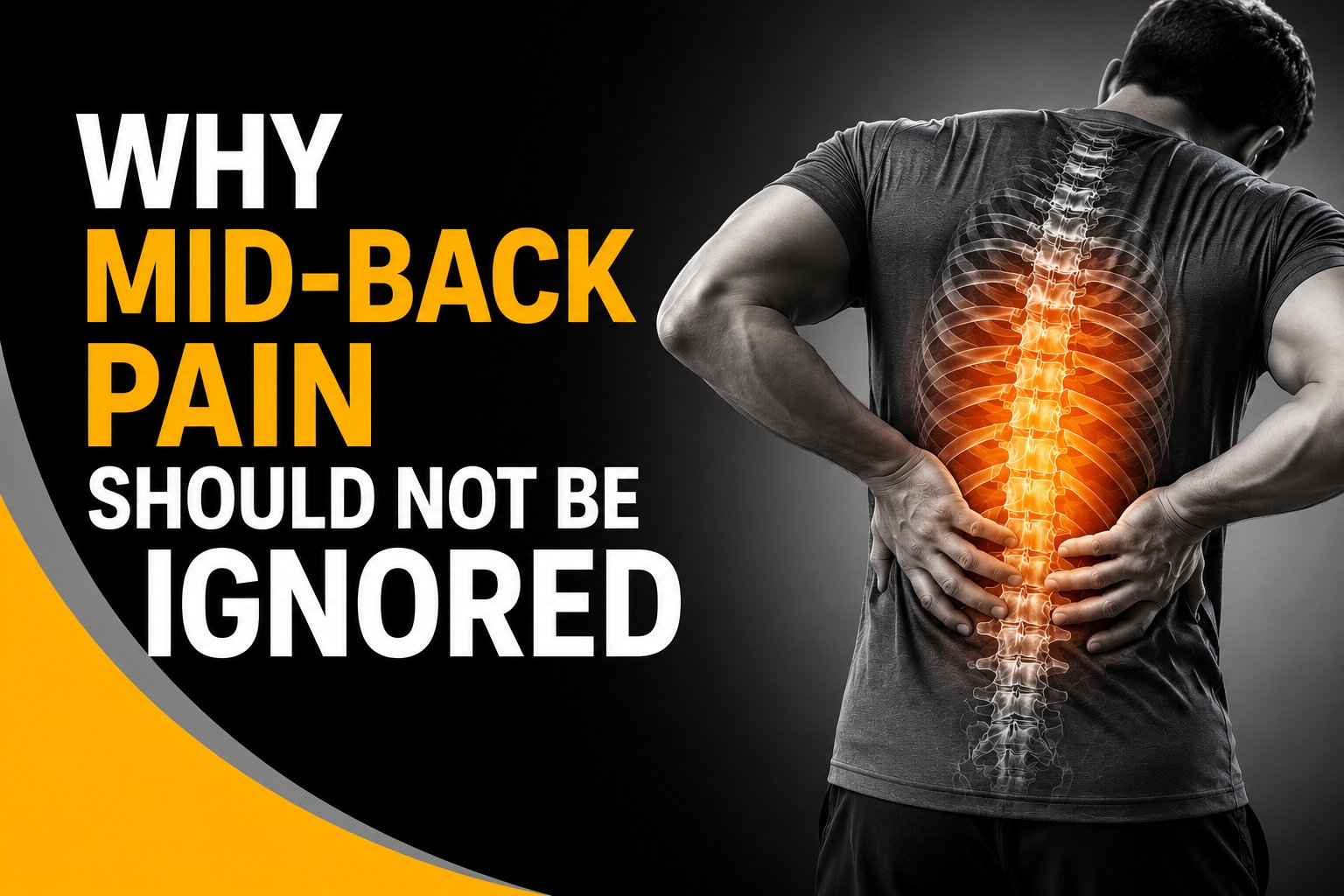
Mid-back pain commonly develops during:
- Repetitive lifting activity
- Sports requiring rotation and overhead movement
- Poor posture during sitting
- Overtraining and muscle fatigue
- Falls and traumatic injuries
- Long periods of inactivity
Patients experiencing symptoms associated with mid-back pain and thoracic spine conditions may benefit from orthopedic evaluation to identify the underlying cause of discomfort.
Common Causes of Mid-Back Pain
Not all mid-back pain develops from temporary soreness. Many thoracic spine conditions involve muscle strain, joint irritation, ligament injury, or posture-related stress.
Muscle Strain
Muscle strain commonly develops when the muscles supporting the thoracic spine become overstretched or overworked.
Symptoms may include:
- Muscle tightness
- Sharp pain during movement
- Reduced flexibility
- Soreness after activity
Muscle strain frequently affects athletes participating in golf, baseball, tennis, rowing, and strength training activities.
Ligament Sprains
Ligament injuries may occur after falls, collisions, sudden twisting movements, or traumatic impact injuries.
Symptoms may include:
- Localized back pain
- Difficulty rotating the torso
- Spinal stiffness
- Pain during movement
Joint Dysfunction and Degenerative Conditions
Joint dysfunction develops when the joints supporting the thoracic spine become inflamed, irritated, or restricted.
Patients struggling with chronic stiffness or spinal discomfort often benefit from non-surgical orthopedic rehabilitation and spine recovery treatments focused on restoring posture, flexibility, and movement mechanics.
Poor Posture and Repetitive Stress
Long hours sitting at a desk, repetitive athletic activity, and poor spinal alignment may gradually increase strain on the thoracic spine and surrounding muscles.
Signs Your Mid-Back Pain May Require Orthopedic Evaluation
Temporary soreness may improve with rest, but persistent symptoms should not be ignored, especially when mid-back pain interferes with movement or activity.
You should consider orthopedic evaluation if you experience:
- Pain lasting longer than several days
- Persistent muscle tightness
- Reduced spinal flexibility
- Pain during twisting or rotation
- Difficulty standing upright
- Pain interfering with sleep or exercise
- Recurring thoracic spine discomfort
Ignoring chronic thoracic spine stress or ligament injuries may increase the risk of worsening orthopedic complications.
How Untreated Mid-Back Conditions Can Affect Long-Term Mobility
Untreated thoracic spine conditions may gradually increase stress on surrounding muscles, joints, and stabilizing structures.
Over time, chronic mid-back pain may contribute to:
- Reduced flexibility
- Muscle imbalance
- Poor posture
- Reduced athletic performance
- Recurring pain during activity
- Long-term mobility limitations
Active adults who continue repetitive activity despite worsening symptoms may increase the risk of more significant spinal dysfunction.
Non-Surgical Treatment Options for Mid-Back Pain
Many thoracic spine conditions improve with conservative orthopedic treatment and rehabilitation-focused care.
Non-surgical treatment options may include:
- Physical therapy
- Mobility and flexibility exercises
- Posture correction training
- Strengthening programs
- Activity modification
- Ultrasound-guided injections
Athletes and active adults recovering from thoracic spine injuries often require rehabilitation programs focused on restoring flexibility, posture, spinal stability, and safe return-to-activity progression.
When Spine Surgery May Be Recommended
Some severe spinal injuries or advanced degenerative conditions may require surgical evaluation when conservative treatment no longer provides adequate relief.
Surgical treatment may be considered for:
- Structural instability
- Advanced degeneration
- Persistent pain affecting mobility
- Failure of rehabilitation treatment
- Severe trauma-related injuries
Patients with advanced orthopedic spine conditions may benefit from minimally invasive orthopedic spine procedures designed to restore mobility, reduce pain, and improve long-term function.
How Active Adults Can Help Reduce Mid-Back Injuries
While not every thoracic spine condition is preventable, proper posture, conditioning, and movement mechanics may help reduce repetitive strain on the mid-back region.
Helpful prevention strategies may include:
- Improving posture during sitting and exercise
- Strengthening core and upper-back muscles
- Stretching regularly
- Using proper lifting technique
- Avoiding repetitive overtraining
- Allowing adequate recovery time
Active adults with recurring spinal stiffness or thoracic pain should avoid ignoring symptoms because repetitive strain injuries may gradually worsen over time.
Where to Find an Orthopedic Spine Doctor Near Pittsburgh
Persistent mid-back pain, stiffness, or reduced mobility should not be ignored, especially when symptoms interfere with sports participation, exercise, work, or daily movement.
Sports Medicine & Joint Replacement Specialists provides orthopedic spine evaluation and sports medicine care throughout Pittsburgh, Greensburg, and Warrendale.
Request an Appointment(opens in a new tab)(opens in a new tab)
Frequently Asked Questions
What causes chronic mid-back pain?
Chronic mid-back pain may result from muscle strain, ligament injuries, posture problems, joint dysfunction, or repetitive overuse.
How do I know if mid-back pain is serious?
Pain lasting longer than several days, reduced mobility, recurring stiffness, or pain affecting activity may indicate orthopedic spine conditions requiring evaluation.
Can mid-back pain improve without surgery?
Many thoracic spine conditions improve with physical therapy, strengthening exercises, rehabilitation, and conservative orthopedic treatment.
What activities commonly contribute to mid-back injuries?
Weightlifting, rotational sports, repetitive overhead movement, prolonged sitting, and poor posture commonly stress the thoracic spine.
Where can I find an orthopedic spine doctor near Pittsburgh?
Sports Medicine & Joint Replacement Specialists provides spine and sports medicine treatment throughout Pittsburgh, Greensburg, and Warrendale, PA.
