Key Takeaways
• Muscle injuries are common in sports, exercise, and physical activity.
• A pulled muscle usually refers to a mild muscle strain.
• A torn muscle typically involves more significant damage to muscle fibers.
• Symptoms such as severe pain, bruising, or loss of strength may indicate a tear.
• Early evaluation by a sports medicine specialist can help guide proper treatment and recovery.
Book an Appointment(opens in a new tab)
Understanding Muscle Injuries
Muscle injuries are among the most common problems affecting athletes and active individuals. They can occur during sports, exercise, lifting heavy objects, or even sudden movements in everyday activities.
The terms pulled muscle, muscle strain, and muscle tear are often used interchangeably. However, they can represent different levels of injury severity.
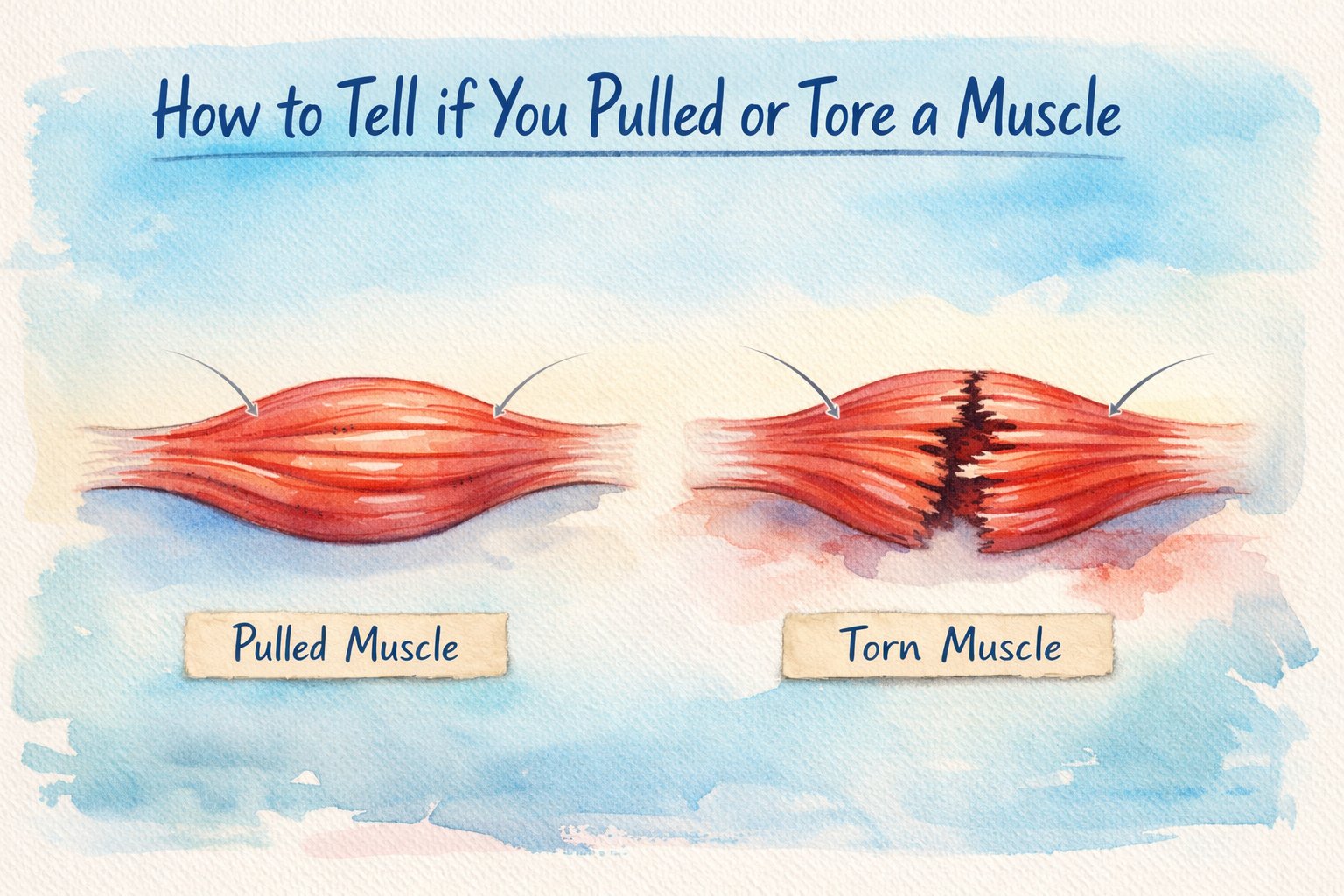
Understanding the difference between these injuries is important for determining the right treatment approach and recovery timeline.
What Is a Pulled Muscle?
A pulled muscle typically refers to a mild or moderate muscle strain.
Muscle strains occur when muscle fibers stretch beyond their normal capacity. This usually happens during sudden movements, overstretching, or excessive physical exertion.
Pulled muscles commonly affect areas such as:
hamstrings
calves
lower back
shoulders
groin
In many cases, pulled muscles involve only minor damage to muscle fibers and can heal with conservative treatment.
For a deeper explanation of this injury, see Torn Muscle vs Pulled Muscle: What’s the Difference(opens in a new tab).
What Is a Torn Muscle?
A torn muscle occurs when a significant portion of the muscle fibers are damaged or ruptured.
Muscle tears are usually more severe than simple strains and may result from:
sudden explosive movements
lifting heavy weight
sports collisions
extreme overstretching
In more severe cases, the muscle may partially or completely tear.
These injuries often require medical evaluation to determine the extent of damage and appropriate treatment.
Signs You May Have Pulled a Muscle
A mild muscle strain may produce symptoms such as:
mild to moderate pain
stiffness in the muscle
tenderness when touching the area
slight swelling
discomfort during movement
Symptoms may develop shortly after the activity that caused the injury.
Many mild strains improve with rest, ice, and gradual rehabilitation.
Signs You May Have Torn a Muscle
A muscle tear usually causes more severe symptoms.
Common signs may include:
sudden sharp pain during activity
swelling or bruising around the injured muscle
weakness or difficulty using the muscle
a popping sensation at the time of injury
limited range of motion
In some cases, a visible indentation may appear in the muscle if the tear is severe.
If these symptoms occur, medical evaluation is recommended.
Muscle Strain vs Muscle Tear
Muscle strains and tears exist on a spectrum of injury severity.
Doctors often classify muscle injuries into three grades.
Grade 1 (Mild Strain)
small number of muscle fibers damaged
mild discomfort
minimal strength loss
Grade 2 (Moderate Tear)
partial tearing of muscle fibers
noticeable pain and swelling
reduced strength
Grade 3 (Severe Tear)
complete rupture of the muscle
significant pain and weakness
possible loss of muscle function
Muscle Injury vs Ligament Injury
Some injuries that feel like muscle strains may actually involve ligaments instead of muscles.
Ligaments connect bones to each other, while muscles connect to bones through tendons.
Ligament injuries may cause joint instability or pain around joints.
To understand the difference between these injuries, read Muscle Strain vs Ligament Tear: What’s the Difference(opens in a new tab).
How Doctors Diagnose Muscle Injuries
Sports medicine specialists typically diagnose muscle injuries through a physical examination and a review of symptoms.
The evaluation may include:
checking muscle strength
assessing range of motion
identifying swelling or bruising
determining pain location
In some cases, imaging tests such as MRI or ultrasound may be used to confirm the severity of the injury.
Muscle Tear Recovery Time
Recovery depends on the severity of the injury and the specific muscle involved.
Typical healing timelines may include:
mild strains: 1–3 weeks
moderate tears: 4–8 weeks
severe tears: several months or longer
You can learn more about expected healing timelines in Muscle Tear Recovery Time: How Long Does It Take to Heal(opens in a new tab).
Proper rehabilitation and gradual return to activity are essential to prevent reinjury.
When Should You See a Sports Medicine Specialist?
Many mild muscle injuries can improve with rest and conservative care. However, medical evaluation may be necessary if symptoms are severe.
You should consider seeing a specialist if:
pain is severe or sudden
swelling or bruising develops quickly
the injured muscle cannot bear weight or move normally
symptoms do not improve after several days
weakness persists during activity
Early diagnosis can help ensure the injury heals properly and prevent long-term complications.
Book an Appointment(opens in a new tab)
Frequently Asked Questions
How do I know if I pulled or tore a muscle?
A pulled muscle usually causes mild to moderate pain and stiffness, while a torn muscle often causes severe pain, bruising, and weakness.
Can a pulled muscle heal on its own?
Yes. Many mild muscle strains heal with rest, ice, and gradual return to activity.
How long does it take for a muscle tear to heal?
Recovery time varies depending on the severity of the tear. Some injuries heal in a few weeks, while severe tears may take several months.
Should I exercise with a pulled muscle?
It is generally best to rest the injured muscle initially. Gradual rehabilitation exercises may be recommended once pain improves.
When should I see a doctor for a muscle injury?
If the injury causes severe pain, swelling, or difficulty using the muscle, medical evaluation is recommended.
