Key Takeaways
• Muscle tear recovery time depends largely on the severity of the injury.
• Grade 1 muscle strains typically heal within 1–3 weeks.
• Grade 2 partial tears may require 4–8 weeks of recovery.
• Grade 3 complete muscle tears can take several months to heal.
• Proper rehabilitation significantly improves recovery outcomes.
• Severe pain, swelling, or muscle weakness should be evaluated by a specialist.
How Long Does a Torn Muscle Take to Heal?
After a muscle injury, one of the first concerns many patients have is how long recovery will take. Healing time depends primarily on the severity of the muscle damage, the location of the injury, and how quickly treatment begins.
Muscle injuries range from mild strains to complete tears. While mild injuries may heal quickly with rest and conservative care, more severe tears often require structured rehabilitation and medical supervision.
If you are unsure about the severity of your injury, our guide on How to Tell If You Pulled or Tore a Muscle(opens in a new tab) explains the symptoms that may indicate a more serious tear.
Understanding Muscle Injury Severity
Sports medicine specialists classify muscle injuries into three grades based on the extent of muscle fiber damage. Muscle injuries can range from mild strains to more serious tears. To better understand how doctors distinguish between these injuries, read Torn Muscle vs Pulled Muscle: What’s the Difference(opens in a new tab)
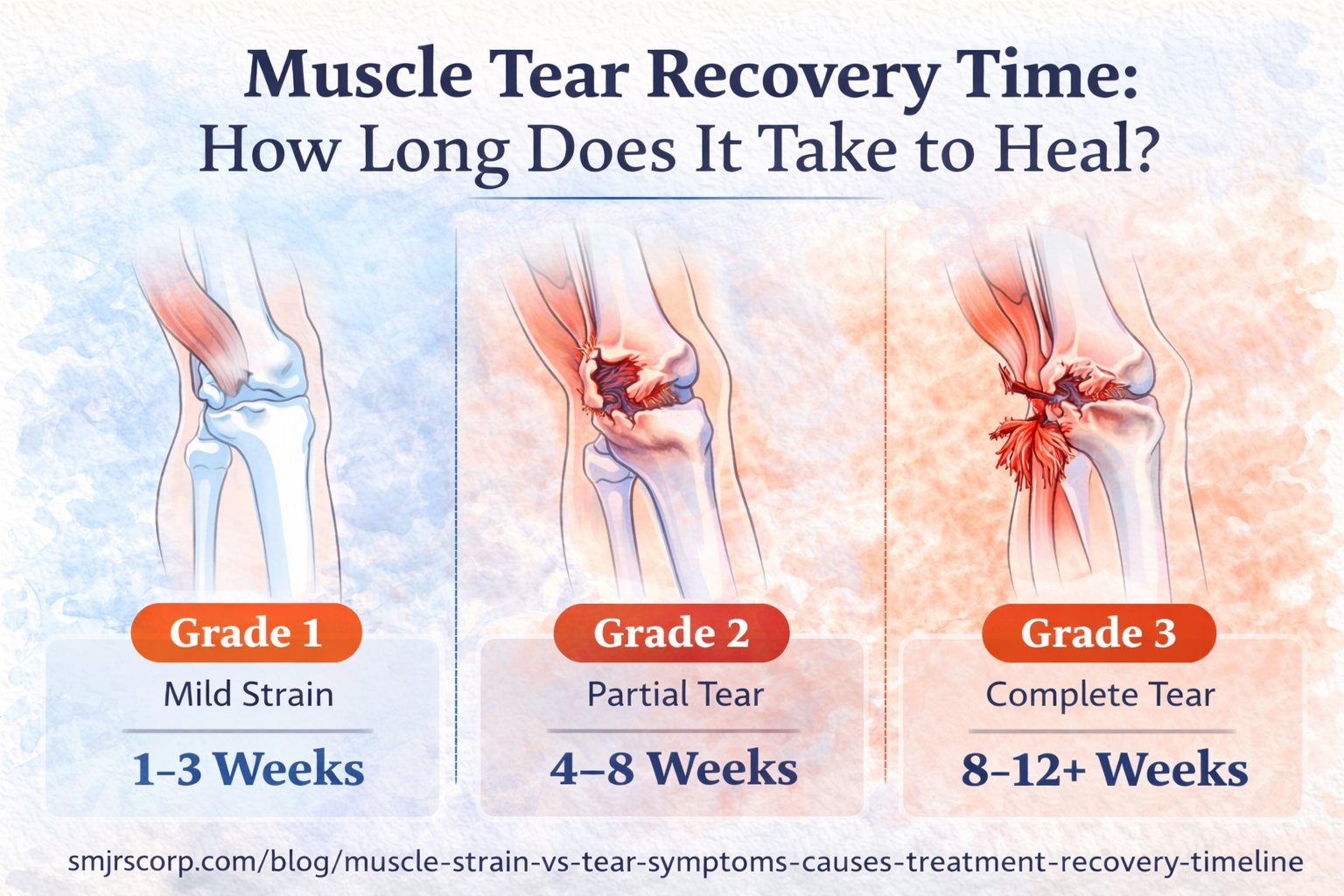
Grade 1 Muscle Strain (Mild)
A Grade 1 strain involves minor overstretching of muscle fibers with little structural damage.
Common symptoms include:
• mild discomfort
• minimal swelling
• slight muscle stiffness
• near-normal strength
Typical recovery time: 1–3 weeks
With proper rest and gradual return to activity, most patients recover fully.
Grade 2 Muscle Tear (Partial Tear)
A Grade 2 injury indicates partial tearing of muscle fibers and more significant tissue damage.
Symptoms often include:
• moderate pain
• noticeable swelling
• bruising within 24–48 hours
• reduced muscle strength
• limited range of motion
Typical recovery time: 4–8 weeks
Guided rehabilitation is often recommended to restore strength and flexibility safely.
Grade 3 Muscle Tear (Complete Rupture)
A Grade 3 injury represents a full rupture of the muscle fibers.
Symptoms may include:
• sudden sharp pain during activity
• a popping sensation at the time of injury
• significant swelling and bruising
• loss of muscle function
• difficulty moving the affected area
Typical recovery time: 8–12+ weeks
In some cases, surgical treatment may be required.
Muscle Tear Recovery Timeline
Recovery varies depending on injury severity, but the following estimates provide a general guideline.
What Affects Muscle Tear Recovery Time?
Several factors influence how quickly a muscle injury heals.
These include:
• severity of muscle fiber damage
• location of the injured muscle
• blood supply to the area
• how quickly treatment begins
• whether rehabilitation is started early
• returning to activity too soon
For example, injuries affecting large muscle groups such as the hamstrings or quadriceps may take longer to heal due to the functional demands placed on those muscles. In some cases, symptoms may involve surrounding structures rather than the muscle itself. Our article on Muscle Strain vs Ligament Tear: What’s the Difference(opens in a new tab) explains how ligament injuries differ from muscle injuries and why recovery timelines may vary.
Can a Torn Muscle Heal on Its Own?
Many mild to moderate muscle tears heal naturally with conservative treatment.
Early treatment often includes:
• rest
• ice
• compression
• elevation
However, recovery does not end with rest alone. Structured strengthening and mobility exercises are essential to restore normal function and reduce the risk of reinjury.
How Long Does Swelling Last After a Muscle Tear?
Swelling is a natural inflammatory response following muscle injury.
In mild strains, swelling may resolve within several days. In partial tears, swelling can persist for a few weeks while the muscle heals.
Persistent swelling or worsening bruising may indicate more significant tissue damage and should be evaluated by a specialist.
Can You Walk With a Torn Muscle?
Whether walking is possible depends on the location and severity of the injury.
Examples include:
• a hamstring tear may allow cautious walking but limit running
• a calf tear may make weight-bearing difficult
• a quadriceps tear may affect stair climbing
If walking causes sharp pain or worsening symptoms, medical evaluation is recommended.
Diagnosis: When Is Imaging Needed?
Muscle injuries are often diagnosed through a physical examination.
Imaging tests may be recommended when:
• severe weakness is present
• swelling is significant
• structural rupture is suspected
• symptoms fail to improve
MRI or ultrasound imaging may be used to determine the extent of muscle damage.
Why Rehabilitation Is Important
One of the most common reasons recovery is delayed is returning to activity too quickly.
Common mistakes during recovery include:
• ignoring persistent pain
• skipping strengthening exercises
• stretching aggressively too early
• returning to sports before healing is complete
Rehabilitation helps restore:
• muscle strength
• flexibility
• stability
• neuromuscular coordination
These factors are essential for preventing reinjury.
When Should You See a Sports Medicine Specialist?
Medical evaluation is recommended if you experience:
• severe or worsening pain
• significant bruising
• muscle weakness
• inability to bear weight
• symptoms that do not improve after several days
Early diagnosis helps determine whether conservative treatment is sufficient or if additional care is necessary.
Preventing Future Muscle Tears
Once healed, prevention strategies are important for reducing the risk of future injuries.
Helpful strategies include:
• proper warm-up before activity
• strengthening surrounding muscle groups
• gradual increases in training intensity
• maintaining flexibility
• addressing muscle imbalances
Early treatment of minor muscle strains can also prevent them from progressing into more severe tears.
Book an Appointment(opens in a new tab)
Frequently Asked Questions
How long does a pulled muscle take to heal?
A mild pulled muscle usually heals within 1–3 weeks. Partial muscle tears may take 4–8 weeks, while severe tears can require several months of recovery.
Can a muscle tear heal on its own?
Many mild to moderate tears heal with rest, rehabilitation, and gradual return to activity. Severe tears may require additional treatment.
How do you know if a muscle tear is serious?
Severe pain, visible bruising, weakness, or difficulty using the muscle may indicate a more serious injury.
Should you completely rest a pulled muscle?
Short-term rest is important, but gradual rehabilitation exercises are necessary to restore strength and prevent reinjury.
How long does swelling last after a muscle tear?
Swelling from mild strains may resolve within a few days, while swelling from more severe tears can last several weeks.
