Key Takeaways
• Muscle strains and muscle tears are among the most common sports injuries affecting athletes and active individuals.
• A pulled muscle typically refers to a mild or moderate muscle strain.
• A torn muscle involves more significant damage to muscle fibers and may require medical evaluation.
• Symptoms may include pain, swelling, bruising, and reduced strength.
• Recovery time depends on the severity of the injury and the affected muscle.
• Early diagnosis and proper rehabilitation can help prevent long-term complications.
Book an Appointment(opens in a new tab)
Understanding Muscle Injuries
Muscle injuries occur when muscle fibers are stretched beyond their normal capacity or partially torn. These injuries are common in sports, exercise, and physical activities that require sudden movement, explosive power, or repetitive strain.
Athletes frequently experience muscle injuries during activities such as running, jumping, lifting, or rapid changes in direction. However, muscle strains can also occur during everyday movements such as lifting heavy objects or slipping unexpectedly.
In sports medicine, muscle injuries typically fall into two main categories:
muscle strains
muscle tears
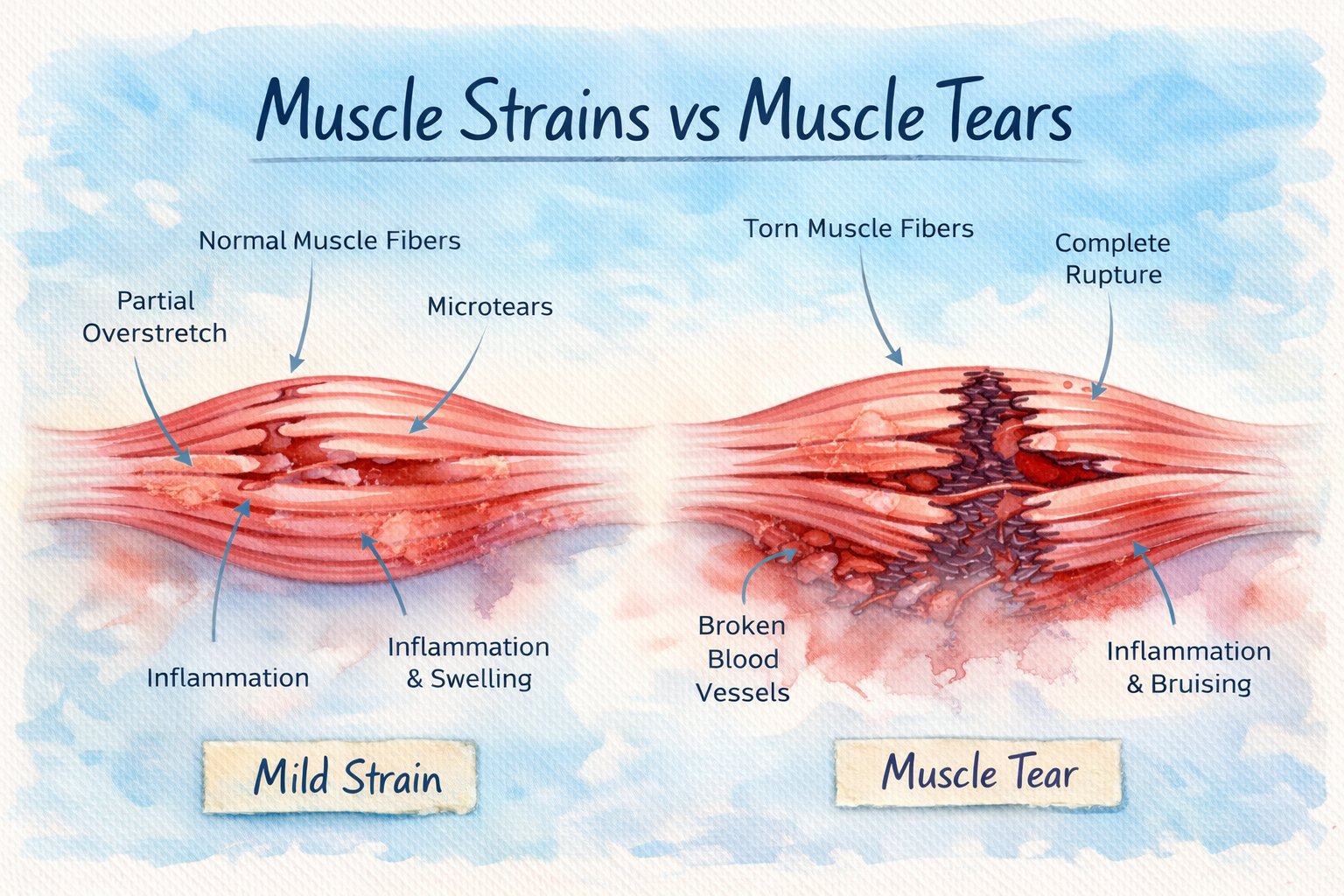
Although many people refer to both injuries as a pulled muscle, there are important differences in severity and treatment.
Understanding these differences can help patients recognize symptoms early and seek appropriate care.
If you are unsure whether your injury is mild or severe, this guide explains how to tell if you pulled or tore a muscle(opens in a new tab).
What Is a Muscle Strain?
A muscle strain occurs when muscle fibers stretch beyond their normal limits. This may happen due to sudden force, overuse, or improper movement.
Muscle strains are commonly referred to as pulled muscles and often occur in areas such as:
hamstrings
calves
lower back
shoulders
groin
Most muscle strains involve small tears within the muscle fibers.
Common symptoms include:
mild to moderate pain
muscle stiffness
tenderness when touching the area
mild swelling
discomfort during movement
Muscle strains often improve with conservative treatment such as rest, ice, and gradual rehabilitation.
What Is a Muscle Tear?
A muscle tear occurs when a larger portion of muscle fibers rupture or separate.
These injuries are typically more severe than mild strains and may result from:
sudden explosive movements
heavy lifting
sports collisions
overstretching the muscle
Severe muscle tears may cause immediate pain and functional limitations.
Common symptoms include:
sudden sharp pain
swelling or bruising
muscle weakness
difficulty moving the affected area
a popping sensation during injury
A comparison of these injuries is explained in Torn Muscle vs Pulled Muscle: What’s the Difference(opens in a new tab).
Muscle Strain vs Muscle Tear: Injury Severity
Sports medicine specialists typically classify muscle injuries into three grades.
Grade 1 Muscle Strain
small number of muscle fibers damaged
mild pain and stiffness
minimal loss of strength
Grade 2 Muscle Tear
partial tearing of muscle fibers
moderate pain and swelling
reduced muscle strength
Grade 3 Muscle Tear
complete rupture of the muscle
severe pain
significant weakness or loss of function
Moderate and severe injuries often require professional evaluation to determine the appropriate treatment plan.
Common Causes of Muscle Injuries
Muscle strains and tears can occur for several reasons.
Common causes include:
sudden acceleration or deceleration during sports
lifting heavy objects improperly
inadequate warm-up before exercise
muscle fatigue
poor flexibility or conditioning
overuse during repetitive activity
Athletes in sports such as soccer, football, basketball, and track are particularly vulnerable to muscle injuries.
Muscle Injury vs Ligament Injury
Muscle injuries are sometimes confused with ligament injuries.
Muscles connect to bones through tendons, while ligaments connect bones to other bones.
Ligament injuries often affect joint stability and may occur in areas such as the knee or ankle.
Understanding these differences is important when diagnosing sports injuries.
You can learn more about this distinction in Muscle Strain vs Ligament Tear: What's the Difference(opens in a new tab).
How Doctors Diagnose Muscle Strains and Tears
Sports medicine specialists diagnose muscle injuries through a physical examination and review of symptoms.
During evaluation, a doctor may assess:
muscle strength
range of motion
swelling or bruising
location of pain
ability to bear weight
Imaging tests may sometimes be used to confirm the injury.
These may include:
MRI scans
ultrasound imaging
Accurate diagnosis helps determine the severity of the injury and guides treatment decisions.
Muscle Tear Recovery Time
Recovery timelines vary depending on the severity of the injury and the muscle involved.
Typical recovery estimates include:
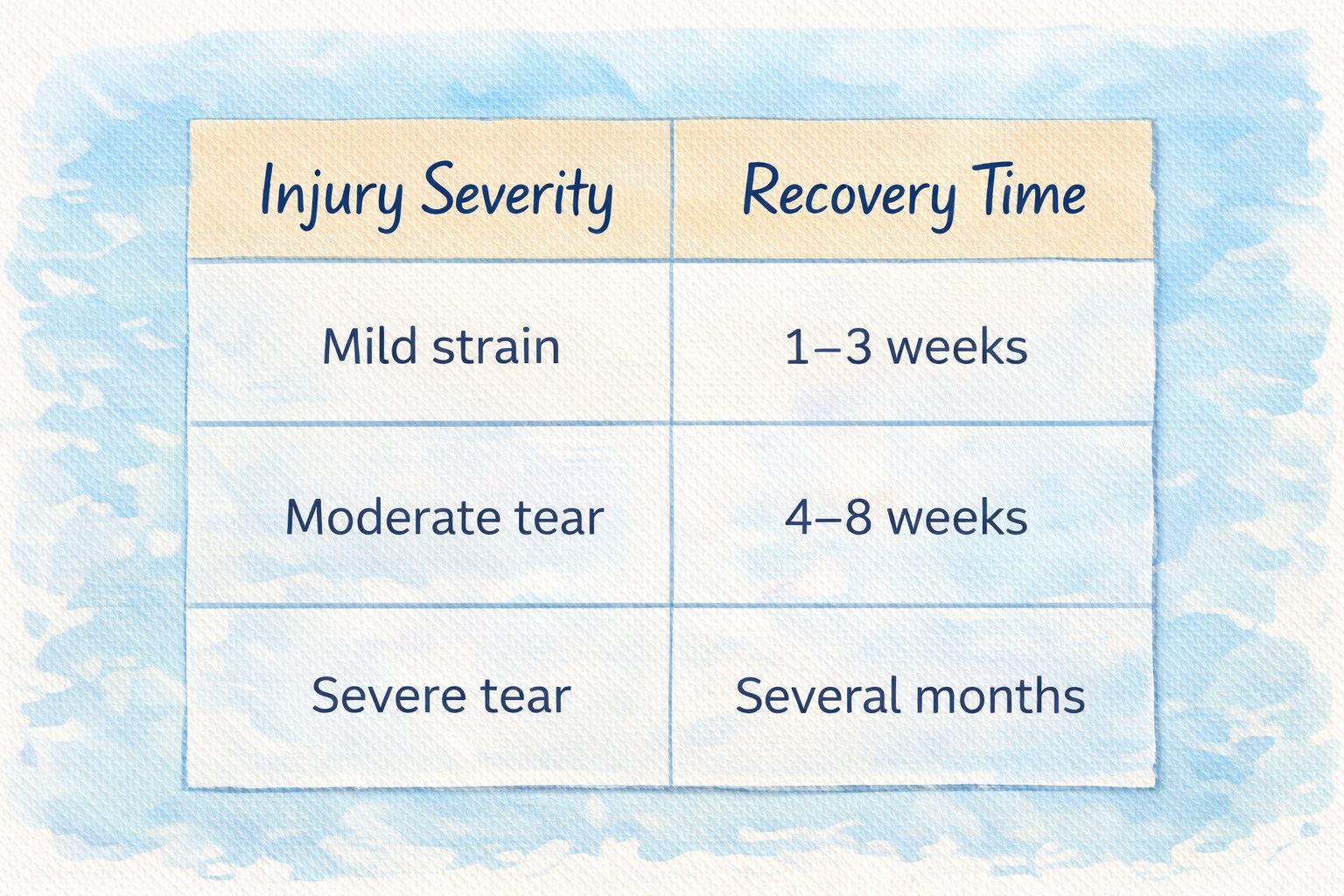
Rehabilitation exercises and physical therapy often play an important role in restoring strength and preventing reinjury.
For a more detailed recovery timeline, see Muscle Tear Recovery Time: How Long Does It Take to Heal(opens in a new tab).
Treatment Options for Muscle Injuries
Treatment typically depends on the severity of the injury.
Initial Treatment (RICE Method)
Most mild muscle injuries are treated with:
rest
ice
compression
elevation
This approach helps reduce swelling and inflammation during the early stages of recovery.
Rehabilitation and Physical Therapy
Once pain improves, gradual rehabilitation exercises may help restore:
flexibility
muscle strength
range of motion
Physical therapy is often recommended to prevent reinjury.
Advanced Treatment
Severe muscle tears may require additional medical treatment or rehabilitation under the supervision of a sports medicine specialist.
When Should You See a Sports Medicine Specialist?
Many mild muscle strains heal on their own with conservative care. However, medical evaluation may be necessary for more severe injuries.
You should consider seeing a specialist if:
pain is severe or sudden
swelling or bruising develops quickly
the muscle feels weak or unstable
symptoms do not improve after several days
movement becomes difficult or painful
Early diagnosis helps ensure proper treatment and reduces the risk of long-term complications.
Book an Appointment(opens in a new tab)
Frequently Asked Questions
What is the difference between a muscle strain and a muscle tear?
A muscle strain typically involves overstretching of muscle fibers, while a muscle tear involves partial or complete rupture of the muscle.
How do I know if I pulled or tore a muscle?
Mild strains usually cause soreness and stiffness, while tears may cause severe pain, bruising, and weakness. Learn more in How to Tell if You Pulled or Tore a Muscle.
How long does it take for a muscle injury to heal?
Recovery time varies depending on injury severity. Mild strains may heal in a few weeks, while severe tears may take several months.
Can I exercise with a pulled muscle?
It is generally recommended to rest the injured muscle initially. Gradual rehabilitation exercises may be introduced once pain improves.
What sports cause the most muscle injuries?
Sports that involve sprinting, jumping, and sudden directional changes—such as soccer, basketball, and football—commonly cause muscle injuries.
